Indonesia is the world’s largest producer of tropical seaweed, yet its position in the global seaweed economy remains paradoxical. Despite harvesting millions of tons annually along its extensive coastline, much of Indonesia’s seaweed production still exits the country in raw or semi-dried form, generating limited domestic value. The central challenge and opportunity mlies in transforming seaweed from a smallholder-based coastal activity into high-value, consumer-ready products that can compete in domestic and global markets.
Seaweed as a coastal livelihood backbone
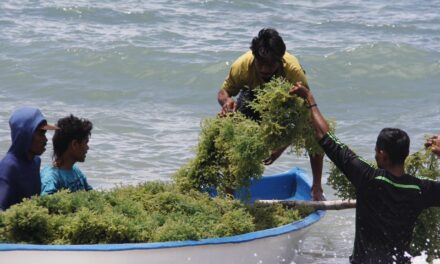
Indonesia hosts exceptionally high seaweed biodiversity, with 1,006 species recorded based on a recent national compilation (Aslan, 2025–2026). This biological richness underpins the strategic role of seaweed farming as one of the most inclusive activities within Indonesia’s blue economy. Cultivation is widely distributed across eastern Indonesia, including South Sulawesi, Central Sulawesi, Southeast Sulawesi, West and East Nusa Tenggara, and Maluku, providing livelihoods for hundreds of thousands of coastal households. Farming production is currently done by species such as Kappaphycus alvarezii, Eucheuma denticulatum, Gracilaria sp., Ulva, sp., Caulerpa sp., and Sargassum sp.which supply essential raw materials for carrageenan, agar, and various food-related applications.
Seaweed farming is characterized by a low barrier to entry. It requires minimal external inputs, no freshwater, and relatively simple cultivation technologies, making it accessible to small-scale coastal communities. For many artisanal fishers facing declining wild catches, seaweed farming has emerged as a viable livelihood alternative that is both economically accessible and environmentally low-impact. Beyond income generation, seaweed cultivation also functions as social capital, shaping household labor arrangements, gender participation, and intergenerational knowledge transfer within coastal communities.
However, these strengths also reveal structural vulnerabilities. Smallholder farmers remain highly exposed to price volatility, disease outbreaks such as ice-ice syndrome, and environmental pressures arising from coastal pollution and extractive activities, including mining. In the absence of effective downstream integration, producers capture only a small fraction of the total economic value generated along the seaweed value chain.
The structural gap in the value chain
Indonesia’s seaweed sector is frequently described as “strong upstream, weak downstream.” While production volumes are substantial, domestic processing capacity remains limited. Large quantities of dried seaweed are exported to overseas processing hubs, where they are refined into carrageenan, agar, nutraceuticals, cosmetic ingredients, and functional foods, and subsequently re-imported as finished products at significantly higher prices.
Several factors explain this structural gap. Processing activities require capital-intensive infrastructure, consistent raw material quality, and specialized technical expertise. Fragmented supply chains complicate standardization and traceability, while past policy frameworks have emphasized production volume over value addition, innovation, and branding. As a result, Indonesia continues to function primarily as a raw material supplier in a global industry where the highest margins accrue at the stages of formulation, branding, and retail.
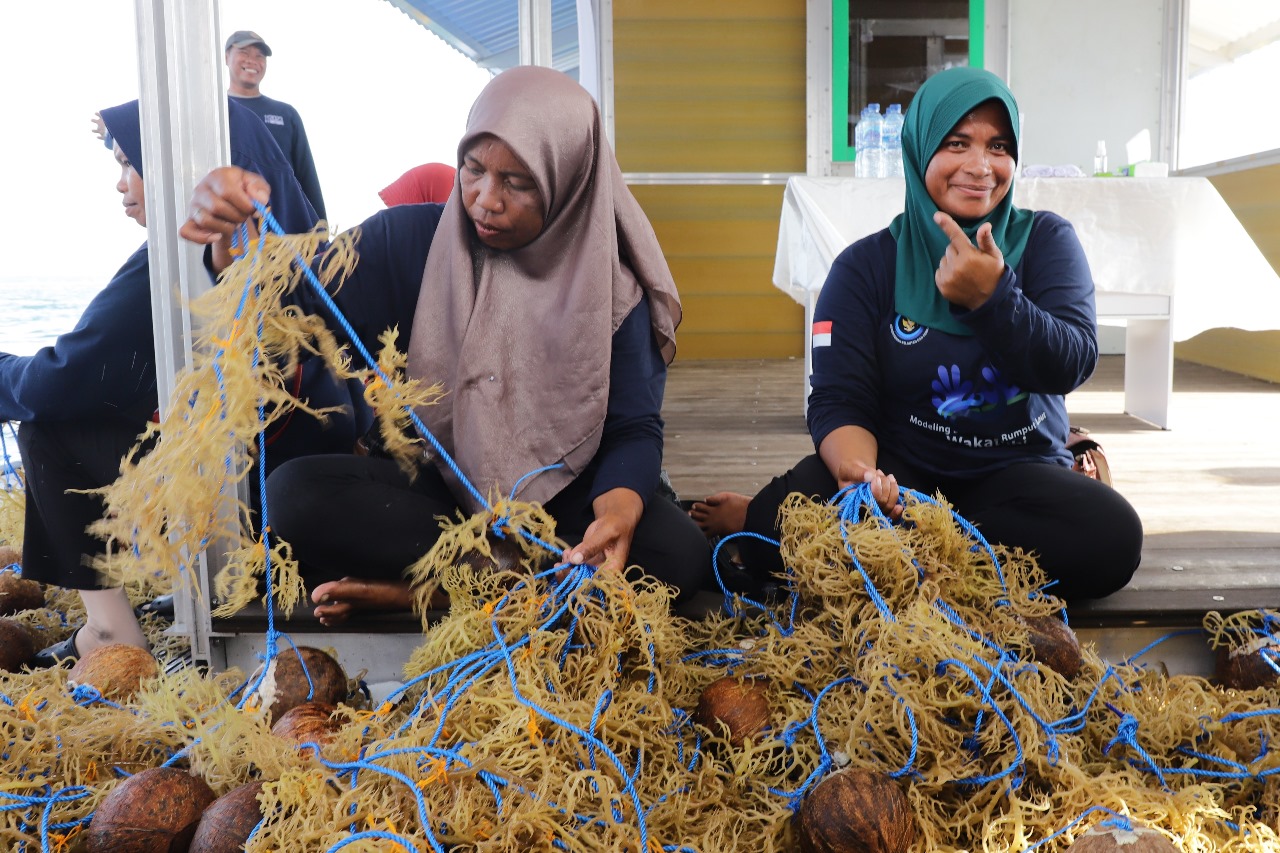
Smallholder farmers remain vulnerable to price swings, ice-ice disease, and coastal pollution. ©KKP
From raw biomass to refined value
Moving seaweed from shore to shelf requires reframing it not merely as dried biomass, but as a versatile bioresource. While carrageenan and agar remain central products, global demand is rapidly diversifying. Seaweed-based foods, plant-based protein alternatives, biostimulants, animal feed additives, pharmaceuticals, cosmetics, biodegradable packaging, and bioenergy applications are reshaping the seaweed economy.
Indonesia holds clear comparative advantages, including tropical species with rapid growth rates, year-round production cycles, and diverse biochemical properties. However, realizing this potential depends on improvements in post-harvest handling, quality control, and processing technologies. High moisture content, contamination, and species mixing common challenges at the farm level can significantly reduce processing efficiency and final product quality. Investments in village-level drying facilities, cooperatives, and nucleus–plasma models linking farmers with processors are therefore critical to stabilizing supply and increasing value capture.
Read more:
1. Seaweed without Borders
Innovation, technology, and digitalization
Technology serves as a key bridge between shore and shelf. Advances in cultivation methods, including disease-resistant strains, offshore farming systems, and digital monitoring tools, can enhance production stability. At the processing level, innovations such as enzymatic extraction, green chemistry, and zero-waste biorefinery approaches enable higher yields with reduced environmental footprints.
Digitalization is increasingly important in connecting Indonesian seaweed to global markets. Traceability systems, blockchain-enabled supply chains, and sustainability certification platforms enhance transparency and market access, particularly for buyers concerned with environmental and social standards. In consumer markets, traceability has become a competitive advantage rather than a niche feature. While universities, research institutions, and startups are actively contributing innovations, closer alignment between research outputs and industrial needs remains essential.
Sustainability as a market requirement
Global markets now demand sustainability alongside volume. Seaweed is often promoted as a climate-positive resource due to its capacity to absorb nutrients, improve water quality, and avoid land and freshwater use. However, sustainability cannot be assumed. Poor site selection, excessive coastal density, and pollution exposure can undermine ecological benefits. Social sustainability is equally critical, encompassing fair pricing, secure tenure arrangements, gender inclusion, and protection of smallholder interests.
Indonesia has an opportunity to position its seaweed as not only abundant, but responsibly produced, aligned with the Sustainable Development Goals (SDGs), blue economy principles, and increasingly stringent international standards.
Branding, policy, and governance
Despite its production dominance, Indonesia remains weakly positioned in global seaweed branding. Few consumers associate seaweed products with Indonesia, as finished goods often carry foreign brands even when sourced entirely from Indonesian waters. Developing strong national and regional brands will require coordinated efforts in certification, design, storytelling, and market access. At the same time, domestic markets offer significant opportunities for seaweed-based foods and functional ingredients to support nutrition, food security, and stunting reduction initiatives.
Transforming seaweed from shore to shelf is ultimately a governance challenge. Effective zoning, environmental safeguards, investment incentives, and export policies must operate in a coherent manner. Cross-ministerial coordination and public–private partnerships are essential to expand processing capacity, while inclusive financing mechanisms are needed to ensure smallholders benefit from value-chain upgrading. Policy frameworks should prioritize quality, sustainability, and innovation rather than production volume alone.
Conclusion
Indonesia stands at a critical juncture in its seaweed development pathway. Continuing as a raw material exporter risks locking coastal communities into low-value trajectories. By contrast, advancing seaweed from shore to shelf offers a pathway toward resilient livelihoods, diversified industries, healthier consumers, and a stronger position within the global blue economy. The true value of seaweed lies not only in what grows in the sea, but in how effectively Indonesia can transform it into sustainable products that reach global shelves.