
La Ode M. Aslan
Professor of Aquaculture at Universitas Halu Oleo, Kendari, Indonesia
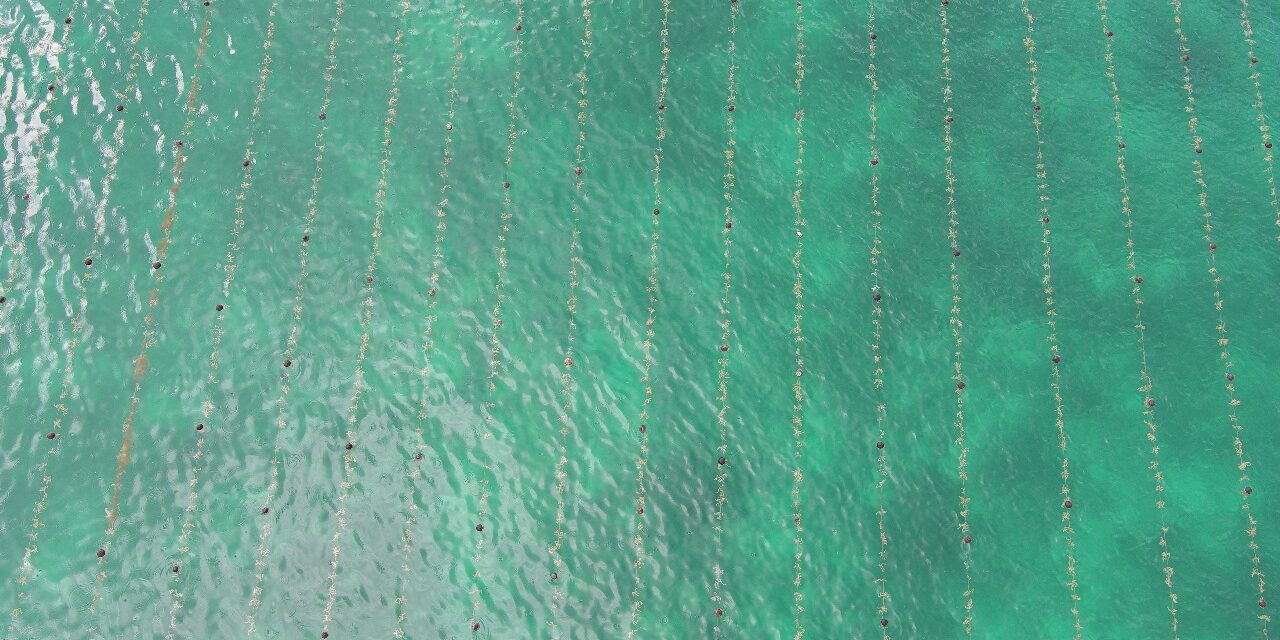
In an era marked by climate uncertainty, geopolitical tension, and widening inequalities, the search for truly inclusive and sustainable development solutions has never been more urgent. While debates often focus on advanced technologies, rare minerals, or large-scale infrastructure, one of the most promising resources lies quietly along the world’s coastlines: seaweed. Grown in tropical, temperate, and cold waters alike, seaweed transcends national boundaries, political divisions, and economic systems. It is, quite literally, a resource without borders.
Seaweed has been cultivated for centuries by coastal communities across Asia, Africa, Europe, and the Americas. Long before the modern vocabulary of sustainability emerged, traditional societies understood its value as food, fertilizer, medicine, and ecological buffer. Today, as the world confronts interconnected crises of food security, climate change, and ocean degradation, seaweed offers a rare convergence of environmental, economic, and social benefits that no single nation can claim as its own.
A global resource in a shared ocean
Unlike terrestrial crops, seaweed does not require freshwater, arable land, or chemical fertilizers. It grows in the open ocean, an environment that inherently transcends political borders. Ocean currents carry nutrients, spores, and biomass across exclusive economic zones, reminding us that marine ecosystems function as integrated systems rather than fragmented jurisdictions.
This ecological reality challenges conventional development thinking, which is often constrained by national policy silos. Seaweed cultivation, by contrast, naturally encourages regional cooperation, shared knowledge, and transboundary governance. Diseases, climate anomalies, and market shocks affecting seaweed farming in one country can quickly ripple across others, reinforcing the need for collective responses rather than isolated solutions.

Livelihoods beyond geography
Seaweed farming supports millions of small-scale producers worldwide, particularly in coastal regions where alternative livelihoods are limited. In Indonesia, the Philippines, Tanzania, and Madagascar, seaweed farming has become a vital source of income for women and marginalised households. In Europe and North America, interest is growing in seaweed for food innovation, bio-materials, and climate solutions.
What unites these diverse contexts is not geography, but shared vulnerability and opportunity. Seaweed farmers in different parts of the world face similar challenges: fluctuating prices, climate variability, access to quality seedlings, and unequal bargaining power in global value chains. Addressing these issues requires a perspective that views seaweed not as a national commodity, but as a global livelihood system.
A “seaweed without borders” approach emphasises equity in global markets, fair trade mechanisms, and inclusive value chains that reward producers for environmental stewardship. It also calls for stronger South–South and South–North collaboration in research, technology transfer, and capacity building.
Climate action without borders
Seaweed’s role in climate mitigation and adaptation further underscores its transboundary significance. Seaweed absorbs carbon dioxide, improves coastal water quality, and can reduce ocean acidification at local scales. Large-scale seaweed farming has been proposed as a nature-based solution that delivers multiple climate co-benefits without competing with food crops or land-based ecosystems.
Read more
1. Indonesia promotes seaweed potential at the World Ocean Conference (UNOC)
2. Greenhouse seaweed drying innovation improves quality and productivity
3. Maintaining post-harvest quality of Ulva to keep prices high
Climate change itself does not respect borders, and neither should climate solutions. Heatwaves, altered currents, and extreme weather events increasingly affect seaweed productivity across regions. Shared monitoring systems, regional early-warning mechanisms, and coordinated adaptation strategies are therefore essential. Seaweed offers a platform for cooperative climate action rooted in shared ecological interests rather than political rivalry.
Food and nutrition for a shared future
As global food systems struggle with sustainability and resilience, seaweed is gaining recognition as a nutritious, low-impact food source rich in minerals, vitamins, and bioactive compounds. From traditional diets in East Asia to emerging plant-based innovations in Western markets, seaweed is steadily entering global food conversations.
Promoting seaweed as food is not simply a matter of consumer choice; it is a political act that challenges land-intensive, resource-heavy dietary norms. A borderless seaweed perspective supports global efforts to diversify diets, reduce pressure on terrestrial agriculture, and improve nutrition—particularly in coastal and island communities that are often excluded from mainstream food policy.
Knowledge without borders
One of the greatest barriers to sustainable seaweed development is fragmented knowledge. Scientific research, traditional practices, and policy innovations often remain isolated within national or disciplinary boundaries. Yet seaweed systems are inherently interdisciplinary, connecting marine ecology, agronomy, economics, sociology, and governance.
A “seaweed without borders” philosophy advocates open knowledge sharing, collaborative research networks, and recognition of local and indigenous knowledge alongside formal science. It encourages policymakers and researchers to move beyond extractive research models toward partnerships based on mutual learning and respect.
Rethinking development through the ocean
At a deeper level, seaweed invites a rethinking of development itself. It grows by adapting to currents rather than resisting them, by forming networks rather than standing alone. It embodies a form of productivity that is regenerative, not extractive.
In a world increasingly divided by borders—physical, political, and ideological—seaweed offers a quiet but powerful lesson. Sustainable development cannot be achieved in isolation. It requires cooperation, humility, and an understanding that human prosperity is inseparable from the health of shared ecosystems.
Conclusion
“Seaweed without borders” is more than a slogan; it is a call for a new development mindset. It urges governments, scientists, and communities to see the ocean as a shared space of responsibility and opportunity. By embracing seaweed as a global commons—ecologically, economically, and ethically—the world can move closer to development pathways that are inclusive, resilient, and truly sustainable.
In the end, seaweed reminds us that some of the most effective solutions to global challenges are already growing quietly along our shores, waiting not to be owned, but to be shared.
***
Image: KKP